SEO vs. Web Design: Which Matters More for Small Businesses?
If you run a small business, you’ve likely been told two things: invest in SEO and invest in a better website.
But when it comes to SEO or web design for small business growth, which one actually matters more?
Many businesses focus on one and neglect the other, leading to disappointing results. A well-designed website without traffic won’t generate leads, and strong SEO without good design won’t convert visitors.
In this guide, you’ll learn how SEO and web design work together, and what actually drives more traffic, enquiries, and growth for small businesses.
SEO or Web Design for Small Business: Which Should You Choose?
If you’re deciding between SEO or web design for small business growth, the answer depends on your current situation:
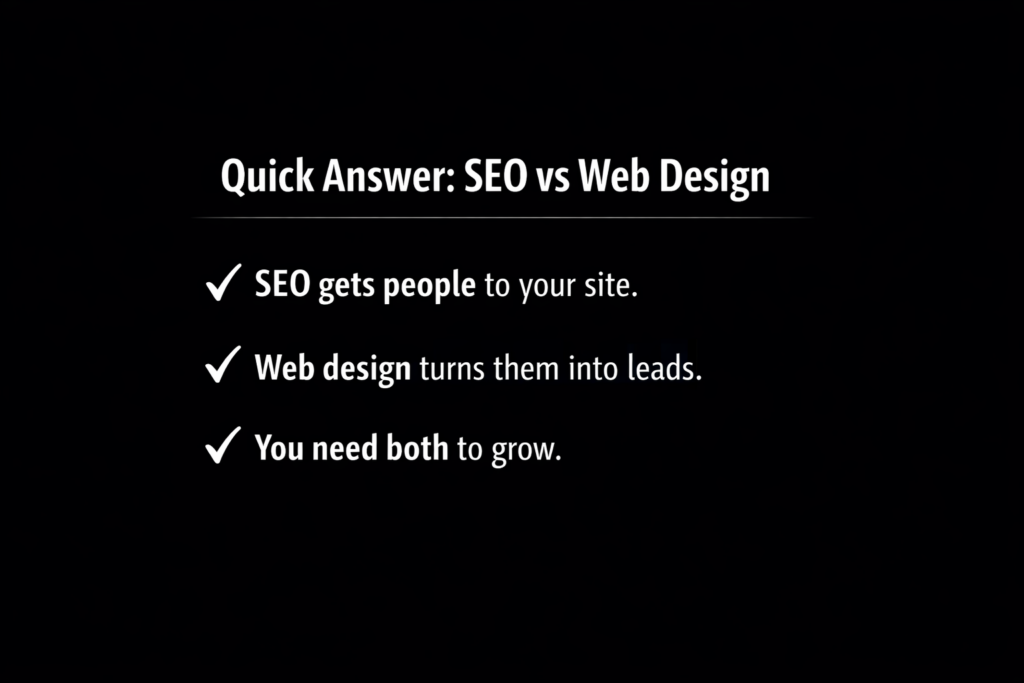
If your website gets no traffic → you need SEO
If you get traffic but no enquiries → you need better web design
If you want consistent growth → you need both working together
What’s the Difference Between SEO and Web Design?
SEO: Getting Found Online
Search engine optimisation is all about helping your website appear in Google when people search for your services, following best practices outlined by Google Search Central.
For example, if you’re a local accountant in Brisbane, you’d want your site to show up when someone searches “accountant near me” or “tax help Brisbane.”
SEO focuses on:
Using targeted keywords throughout your site
Building relevant backlinks from trusted sites
Optimising page speed and mobile usability
Writing helpful, relevant content for your audience
The goal? To drive organic traffic, visitors who find you naturally through search engines.
Web Design: Making a Strong First Impression
Web design, on the other hand, determines how your site looks, feels, and functions. It’s what visitors see when they land on your homepage.
A strong web design focuses on:
Clear navigation so visitors can find information quickly
Visual appeal with consistent colours, fonts, and branding
Responsiveness so it looks great on mobile devices
User experience that encourages visitors to take action
Your website is your digital storefront, even if you have the best SEO, a poor design can turn visitors away before they become clients.
Why You Can’t Separate SEO and Web Design
This is why the debate around SEO or web design for small business is often misleading. They work best together.
It’s tempting to think of SEO and web design as two different stages, first build the site, then “do SEO.” But that approach can hurt your results.
In reality, SEO and web design are deeply interconnected. Decisions made during design can directly impact how well your site ranks.
For example:
If your site loads slowly because of unoptimised images, Google may rank it lower.
If your page layout confuses users, they’ll leave quickly, and high bounce rates hurt SEO.
If your site isn’t mobile-friendly, you’ll lose both rankings and visitors.
A visually stunning website that nobody finds is as ineffective as a high-ranking site that drives people away on arrival.
The Case for Strong Web Design
1. First Impressions Build Trust
People judge credibility in seconds. A modern, professional site tells visitors your business is legitimate and established. Outdated or poorly designed websites can make users question your reliability, even if your services are excellent.
2. Improved User Experience
Web design is about more than looks. A well-structured layout, easy navigation, and clear calls to action keep users engaged and guide them toward booking or enquiring.
3. Conversion Power
Great design turns traffic into leads. Simple forms, intuitive menus, and strong visuals encourage users to take the next step. Even a small design improvement, like making your “Contact Us” button more visible, can boost conversions.
The Case for Strong SEO
1. Organic Visibility
SEO ensures your site gets found by people already searching for what you offer. This makes it one of the most cost-effective marketing strategies for small businesses.
2. Long-Term Growth
Unlike paid ads that stop the moment you stop paying, SEO builds momentum. Consistent optimisation helps your rankings grow over time, attracting new visitors month after month.
3. Targeted Traffic
SEO focuses on intent, people actively looking for your services. That means higher-quality leads and better conversion potential.
How to Balance SEO and Web Design for Maximum Impact
1. Plan SEO Before You Design
Before a single page is built, decide on your target keywords, audience, and structure. This ensures your navigation, headings, and URLs support SEO goals.
2. Prioritise Speed and Mobile Experience
Google rewards fast, mobile-friendly sites. Compress images, use caching, and choose a reliable host to boost performance.
3. Write SEO-Friendly Copy That Reads Naturally
Use your target keywords thoughtfully. Your website should read naturally, avoid stuffing in keywords just for the sake of ranking.
4. Keep Your Design Simple and Intuitive
Don’t overcomplicate things. A clean layout, easy-to-find contact info, and short paragraphs improve both usability and dwell time.
5. Maintain Your Site Regularly
Even the best-designed, most optimised website can’t stay effective without updates. Check for broken links, refresh content, and keep plugins updated.
Common Mistakes to Avoid
Many small business owners unknowingly hurt their SEO or design without realising it. Avoid these pitfalls:
Ignoring mobile optimisation
Using images without alt text or compression
Forgetting to include internal links
Writing vague headlines that lack keywords
Hiding contact info or forms deep within the site
Many issues arise when businesses try to choose between SEO or web design for small business instead of integrating both.
Final Thoughts
So, which matters more, SEO or web design?
The honest answer: you can’t separate them.
A beautifully designed site that no one visits won’t generate leads. A high-ranking site that looks outdated will struggle to convert traffic.
If you’re still deciding between SEO or web design for small business success, the real answer is combining both into one strategy.
When done right, your website becomes a 24/7 salesperson, drawing in visitors, earning their trust, and turning them into clients.
Contact Us Now
Contact our team today and we’ll get back to you as soon as possible.